
Pairing wine with food is a bit of a sport to me. Since successful pairing is just as much an art as a science, there’s a healthy dose of educated guesswork involved. Sometimes I succeed and sometimes I fail – sometimes spectacularly. But with each pairing, I get a little better.
This year’s New Year’s Eve dinner presented one of the more difficult challenges I’ve faced in the wine arena. Our evening’s theme was based upon a meal that was served in 1882. My job was to pair each dish with a suitable wine. It actually seemed pretty easy until my husband reminded me that I needed to stay true to the theme – the wines needed to be of the type that would have been widely available in 1882. There went all my familiar California and Oregon
The most difficult dish was a medium rare steak. The obvious choice is a young-ish California California was in its infancy in 1882, and I’m virtually certain that there was no export business in wine from California
My first thought was to go French. The French region of Bordeaux
Suddenly, I remembered my first grown-up trip to Europe right after I’d graduated from law school many years ago. I traveled to Italy Tuscany (central Italy
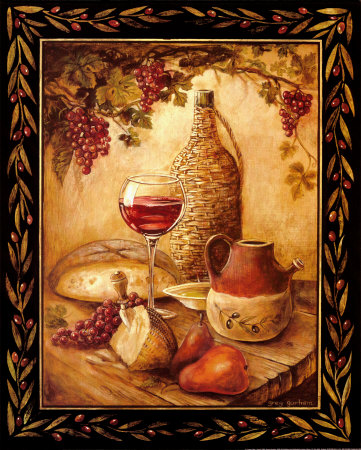
There’s a good chance that your image of Chianti is the same as mine was when I first encountered it: the bulbous bottle with a basket over it and a candle on the top, sitting on a red and white checkered table cloth at the local Italian restaurant. That really was Chianti in the United States
But the fact is that the Chianti our parents drank in the 1970s was never a very good representation of the wine produced in the Chianti region. And, perhaps even more importantly, the overall quality of Chianti wines has improved steadily since the ‘70s.
I still do not recommend most of the very inexpensive ($7-$10) Chiantis you will find. They tend to be quite acidic without a lot of fruit. They aren’t bad with spaghetti, but since you can find terrific California or Washington cabernets or zinfandels that are much better for the same price, why would you bother with the ordinary Chianti?
However, if you look for the Chianti Classico or the Chianti Classico Riserva, you will find a very special wine that matches well with a wine variety of food. Italian wines almost universally love food, and you will find that the wine and the food each make the other exponentially better.
Chianti Classico is a small area of the Chianti region and only wines made in this region may carry the “Chianti Classico” designation. In simple terms, the Chianti Classico region is the traditional region of Chianti before it was expanded to include additional land. Thus, the land has been deemed suitable to the primary grapes of Chianti (sangiovese, canaiolo and trebbiano) for hundreds of years – a pretty good track record! By law, these wines must have a minimum of 80 percent sangiovese, which makes them fairly robust, with high acid, nice fruitiness and a little bit of spiciness. They match very nicely with high-acid foods, such as tomato-based sauces. They’re also great with rich, buttery or creamy sauces because they can cut through the fat beautifully. And, the better ones are even great with red meat. Try them with a steak or a rich stew.
Chianti Classico Riserva is Chianti Classico that has been aged for 38 months instead of the typical 4-7 months for regular Chianti and 24 months for Chianti Classico. The aging creates a lovely, complex wine that is especially well-suited to a nice steak. Unfortunately, the “Riserva” label does tend to come at a little bit higher price.
Because there are so many producers of Chianti (many of them own only a very small number of vines), and because the producers rarely describe their wines or suggest matches on the back of the label, it can be challenging to choose one at the store. So, besides looking for “Classico” and/or “Riserva” on the label, there is one other clue that has generally led me to very good wines: the “gallo nero” or “black rooster.” When you see the pink paper band that goes around the top of the bottle (an indication that the bottle is certified by the Italian government as coming from the legally designated region), look for a picture of a little, black rooster. That picture is an indication that the producer is a part of the Consorzio Vino Chianti Classico, a consortium of producers that were originally established to police the quality and viticultural techniques of those who carried its label. To this day, the organization is active in assuring the quality of the wines that bear its label.
Unfortunately, our local stores do not carry a lot of Chianti. But if you’re willing to drive a few miles, you can find some in Central Oregon . They do tend to be a little more expensive than most of the wines that I write about here, but they’re wonderful for a special occasion, a nice gift for a wine lover or the occasional treat. Here are a few (in alphabetical order) to look for (and note that these are standard prices; you may be able to find these for a lot less right now because expensive wine just isn’t selling as quickly as it has in years past).
Antinori Peppoli Chianti Classico (about $24)
Castello Banfi Chianti Classico Riserva (about $20)
Frescobaldi Nipozzano Chianti Classico Riserva (about $18). This might be my favorite!
Gabbiano Chianti Classico (about $14). This is the easiest one to find.
Ruffino Chianti Classico Riserva Ducale Tradizionale (about $20)
For our steak on New Year’s Eve, we went with the 2006 Santa Margherita Chianti Classico (usually about $26, but on sale right now for $18). It was a perfect match. I can’t say that I’m ready to abandon my trusty Calfornia cabernet sauvignon at $10-12 a bottle for those red meat dinners, but it’s nice to know that I have great options such as Chianti when I want something a little different.

No comments:
Post a Comment